


Contract Worker Management in Manufacturing: Why We're Building It Differently
When we started building Zeba Pro, most of our employee-management workflows naturally assumed something fairly simple: A person joins a company → becomes an employee → works under company policies → eventually exits.
Then manufacturing companies started asking us about contract workers, exposing a clear gap in how software traditionally approaches workforce management.
A manufacturing setup can have permanent employees, factory workers, engineers, salespeople, field-support teams, and people working at the same facility through different contractual arrangements. They may all need attendance, work shifts, enter the same factory, and need supervisory visibility, but that doesn't necessarily mean they should all be managed as identical employees inside the HRMS.
We're currently expanding Zeba Pro's contract-worker management capabilities, with the functionality expected around August 2026 on our current roadmap. Before simply adding a checkbox for "Employee Type: Contract," we've had to answer a bigger question: What actually changes when the person working for you isn't a regular permanent employee?
Manufacturing Companies Brought This Requirement to Us
Contract-worker management wasn't originally an area I expected to prioritize this early. But this is generally how our roadmap evolves when working with startups and operational teams.
A customer asks for something once. We understand the requirement. Then another company asks for something similar, and then another. At that point, it stops looking like an isolated custom request and starts looking like a product gap.
That's what happened with several manufacturing requirements we've worked on. Manufacturing customers pushed us toward better support for:
- Biometric attendance software
- Multiple shifts and night shifts
- Shift grace periods
- Location-wise holidays
- Field-support employees
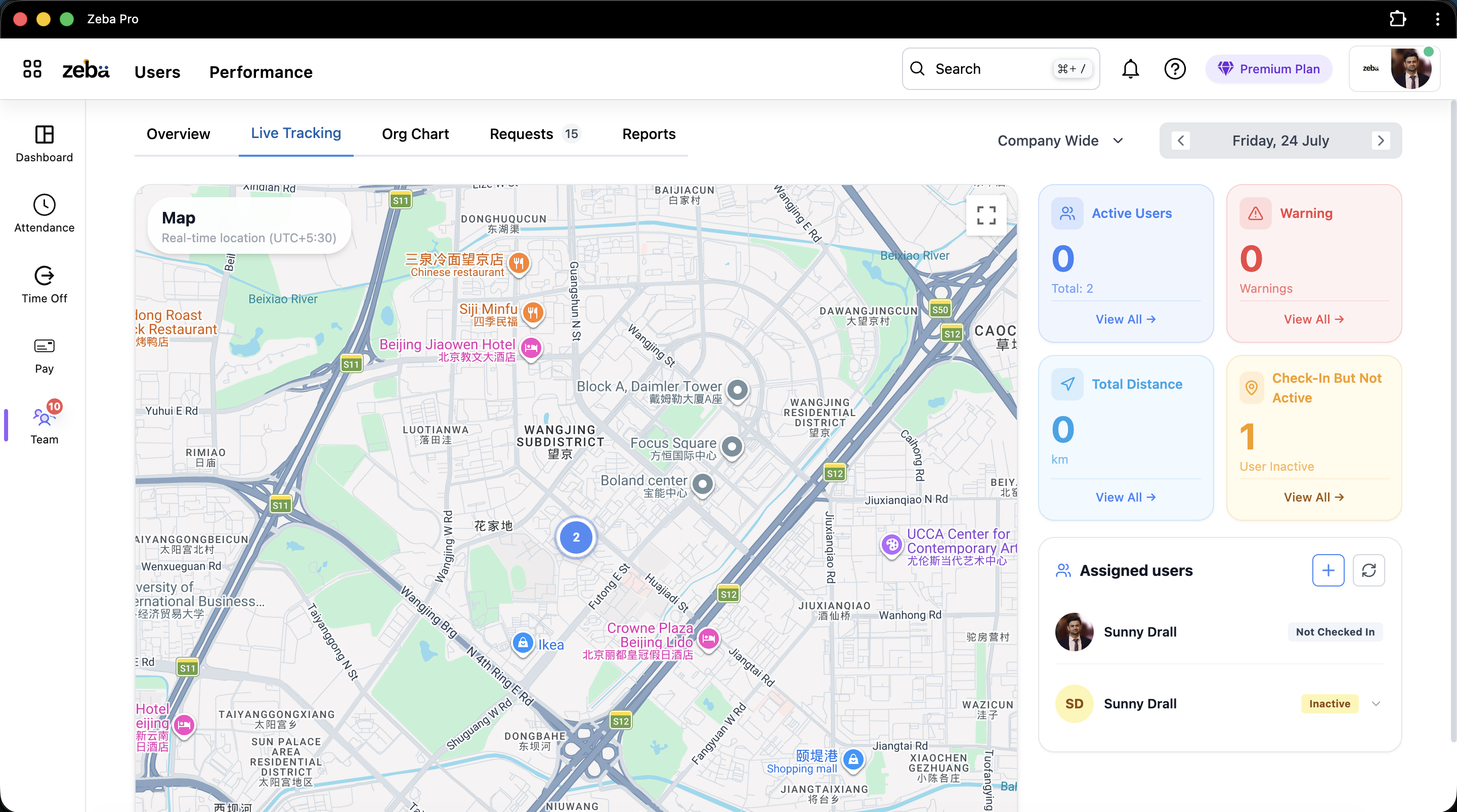
- Live location employee tracking
- And now: Contract workers
The workforce itself in manufacturing is much more varied than it initially appears.
A Factory Doesn't Have One Type of "Employee"
Imagine a manufacturing company with 300 people working across its operations. From a generic software perspective, it would be easy to categorize them simply as "300 Employees."
Operationally, that number might include very different groups:
- Permanent factory employees
- Office employees
- Engineers
- Salespeople
- Field support engineers
- Contract workers
- Managers
An HRMS designed around one standard employee lifecycle becomes awkward when all of these people need to be managed. The first lesson manufacturing companies taught us was: Don't start with the employee record. Start with how the person actually works.
Contract Workers Still Need Attendance
Regardless of the employment arrangement, the company still needs to know: Did the worker come today? When did they arrive? Which shift did they work? How many hours did they work? Which location were they working from?
That's why contract worker attendance is one of the clearest places where workforce management overlaps with core HR operations. If 50 contract workers enter the same facility every day, the operational requirement to record their attendance doesn't disappear simply because they're not permanent employees. But that doesn't mean forcing them through the exact same HR lifecycle as permanent employees.
Biometric Attendance Makes Particular Sense for Contract Workers at a Fixed Factory
We've learned something similar with non-technical manufacturing workers: For people arriving at the same factory every day, we prefer a simple attendance experience. If compatible biometric infrastructure exists, use it. Zeba Pro integrates with compatible eSSL devices supporting iClock APIs.
The worker shouldn't need to open an app, find attendance, check phone permissions, wait for location, and check in. For someone entering the same plant every morning, biometric is much simpler: Enter → Authenticate → Work.
The complexity should be handled by the attendance system rather than transferred to the worker.
Attendance is Only One Part of Contract Workforce Management
This is where simply adding contract workers to a standard employee list becomes limiting. Think about what the organization might eventually need to understand:
- Who is the worker or vendor associated with?
- How long are they expected to work with the organization?
- Which facility can they work at?
- Which shift are they assigned?
- Who manages them?
- What happens when their engagement ends?
- Which company policies or leave management rules apply (or don't apply)?
The exact answers vary significantly between organizations. That's why we're building flexible workflows around user management before treating contract labor management as just another dropdown menu.
A Contract Worker Shouldn't Automatically Inherit Every Permanent-Employee Workflow
This is a product-design principle that matters. Imagine the HRMS has a detailed onboarding workflow for permanent employees with compliance elements reviewed by a legal team.
Now a manufacturing company needs to add 100 contract workers. Should all 100 people be forced through that exact same onboarding workflow? Maybe not. Likewise, the company may need attendance information without requiring every HR feature available to a permanent employee. The system needs enough flexibility to represent that difference, preventing workarounds.
The Excel Sheet Appears Whenever the HRMS Stops Understanding the Workforce
This is something I've seen repeatedly in mid-market businesses: The HRMS manages the normal case, an exception occurs, and someone creates an Excel file. Another exception appears, another column gets added, and soon you have a fragmented setup: HRMS + Contract_Workers.xlsx + WhatsApp + Email.
Now there are two sources of employee information, and management loses a unified picture. This is one of the strongest reasons to bring contract workforce management into the main HR ecosystem. Not because contract workers and permanent employees are identical, but because leadership still needs full operational visibility.
Manufacturing Workforce Management Needs One Picture Without Pretending Everyone is the Same
This is the balance we're trying to find. I don't want Zeba Pro to assume everyone working for a company is identical, but I also don't want companies needing five separate systems to understand their workforce.
If a factory manager asks "Who is working today?", the answer shouldn't require checking permanent employees in the HRMS, contract workers in Excel, field support in another tool, and sales on WhatsApp. The better approach is: Different worker types, different applicable workflows, one clear organizational picture.
Shift Management and Multi-Location Dynamics
Contract workers in manufacturing still operate under shifts. If a worker on a 10 PM to 6 AM night shift punches in at 9:48 PM and punches out the next morning, the HRMS needs to know which shift and working day own that punch.
Furthermore, manufacturing organizations operate across multiple factories, warehouses, and offices. Contract workforce management adds another reason why location needs to be a core part of the system rather than just a text field on a profile.
Field-Based Contract Workers and Practical User Interfaces
Not all contract workers work inside a factory. Some support engineers travel to customer sites to inspect equipment. The attendance method should always follow the work.
However, we avoid trying to solve every attendance problem with a mobile app. Mobile attendance is flexible, but it introduces device permissions, app updates, and network issues. Having spent 12 years in software development, I know my definition of "easy" isn't necessarily the user's definition. For fixed factory workers, biometric devices handled by internal IT teams remain superior.
Contract Workers Make Bulk Management More Important
Adding one contract worker is straightforward in almost any system. But when 100 contract workers start at a location at once, bulk management becomes critical: How are they added, assigned shifts, and updated over time?
A workflow that works for one person can break down at 200. Scalability isn't just about database storage: it's about whether HR teams can perform actions without repeating them 100 times manually.
Managing the End of Engagement and Integration
Contract worker lifecycles require clear offboarding answers: What access stops? What records remain for auditing? How do these records interface with finance team records, stipend processing, or payroll automation?
Even for tax calculations or vendor payout verifications handled via tools like an income tax calculator or stipend setup, having verified attendance data linked to contract terms removes ambiguity.
What I'd Ask Before Choosing Contract Worker Management Software
If you are evaluating contract labor management software, look beyond feature checklists and reasonable pricing. Ask the vendor to demonstrate:
- Can contract workers follow a different workflow from permanent employees?
- How is attendance recorded and can it use existing biometric hardware?
- Can workers be assigned shifts, including night shifts?
- Can workers belong to specific locations?
- Can large groups be added and updated in bulk efficiently?
- What happens when an engagement ends?
- Show me how this works for 100 contract workers, not one.
Different worker types don't need identical workflows, but management should still be able to view and manage the entire workforce without relying on spreadsheets. That is what effective contract worker management in manufacturing should accomplish.


