


Professional tax is a critical component of payroll management that often confuses HR professionals and business owners alike. However, understanding its implications can streamline payroll processes and ensure compliance.
What is Professional Tax?
Professional tax is a tax levied by state governments in India on individuals earning an income. This tax is applicable to professionals, traders, and salaried employees, and its rates can vary significantly from one state to another.
Generally, the tax is calculated based on the income of the individual and is deducted at source by the employer. The funds collected are used for various state welfare programs, making it essential for businesses to comply with local laws.
Key Features of Professional Tax
- State-specific: Professional tax rates and regulations differ across states, requiring precise knowledge for compliance.
- Income-based: The tax is calculated based on an individual's income levels.
- Employer Responsibility: Employers are responsible for deducting and remitting professional tax to the respective state government.
- Monthly Deduction: The tax is usually deducted monthly, with employers required to remit the amounts periodically.
How is Professional Tax Calculated?
Understanding the calculation of professional tax is vital for ensuring accurate payroll processing. The calculation typically follows these steps:
- Determine the gross salary of the employee.
- Identify the applicable professional tax slab based on the employee’s income and state regulations.
- Deduct the professional tax amount from the employee's salary.
- Remit the collected amount to the state government within the stipulated time frame.
Professional Tax Slabs by State
As mentioned, professional tax slabs vary by state. Below is a comparison table showing some states and their respective professional tax slabs:
| State | Monthly Income Range | Professional Tax Rate |
|---|---|---|
| Maharashtra | Up to ₹7,499 | Nil |
| Maharashtra | ₹7,500 - ₹9,999 | ₹175 |
| Karnataka | Up to ₹15,000 | Nil |
| Karnataka | Above ₹15,000 | ₹200 |
| Tamil Nadu | Up to ₹3,000 | Nil |
| Tamil Nadu | Above ₹3,000 | ₹250 |
Compliance Requirements for Employers
Employers must navigate various compliance requirements regarding professional tax effectively. Here are the key responsibilities:
- Registration: Employers must register for professional tax in the respective states where they operate.
- Deduction: Employers are mandated to deduct professional tax from employees' salaries based on the applicable slab rates.
- Payment: Remittance of deducted taxes to the state government must be done within the prescribed timeline.
- Returns Filing: Employers must file professional tax returns periodically, detailing the amounts deducted and paid.
Challenges in Managing Professional Tax
Despite its significance, managing professional tax can present several challenges for HR and payroll teams. Some common issues include:
- Complex Regulations: Different states have varying regulations, making compliance a challenging task.
- Frequent Changes: Tax rates and regulations may change frequently, requiring constant monitoring.
- Manual Errors: Payroll errors in calculating professional tax can lead to penalties and compliance issues.
Leveraging Technology for Professional Tax Compliance
Investing in an HR and payroll management platform, such as Zeba Pro, can significantly ease the burden of managing professional tax. Here’s how:
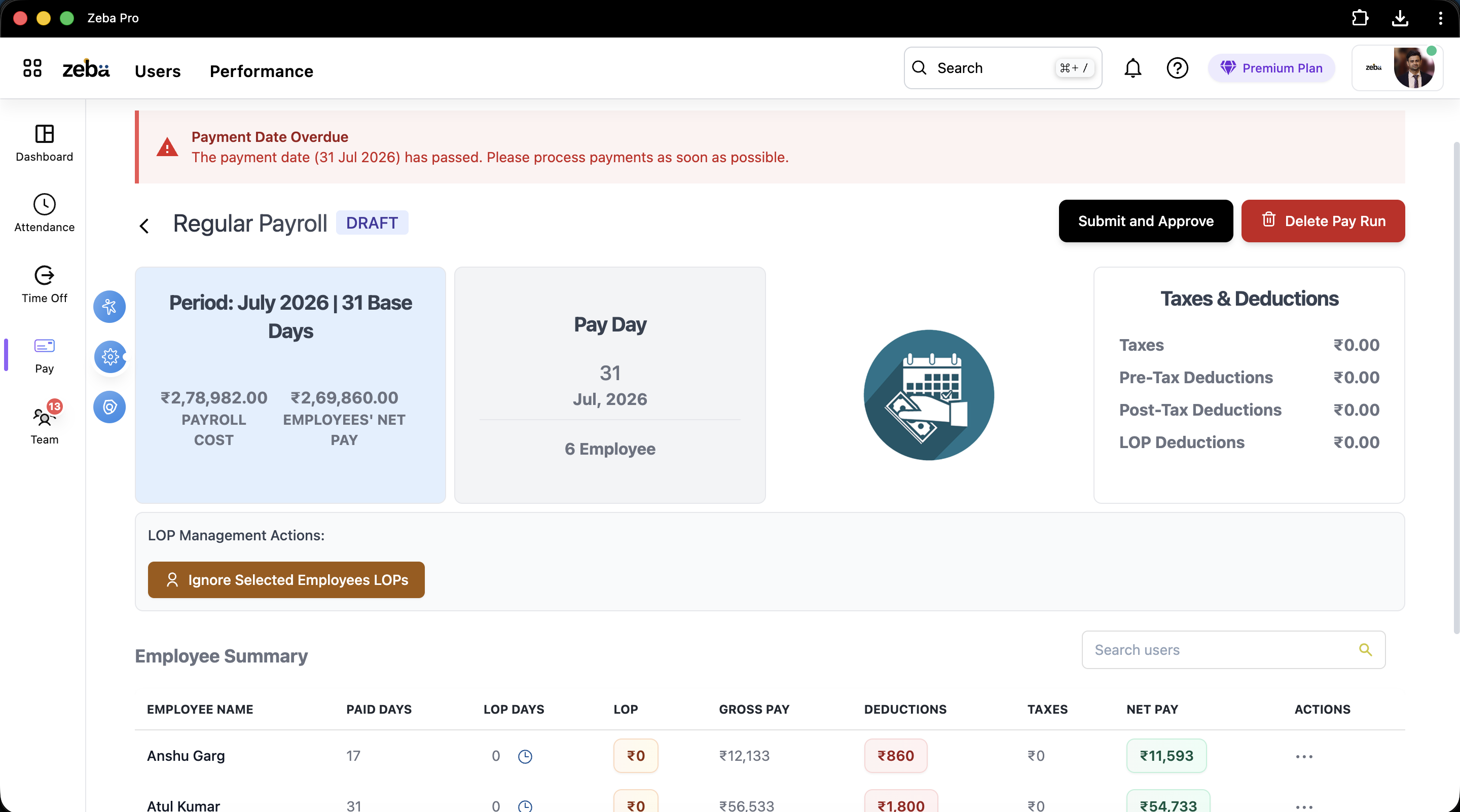
- Automated Calculations: Zeba Pro automatically calculates professional tax based on employee location and salary, reducing manual errors.
- Compliance Tracking: The platform keeps track of state-specific regulations and changes, ensuring employers remain compliant.
- Seamless Remittance: Zeba Pro facilitates timely remittance of professional tax, minimizing the risk of late fees.
Real-World Application
Let’s consider a scenario involving a mid-sized company based in Karnataka with ten employees. Each employee earns between ₹10,000 and ₹20,000. The HR department needs to ensure that professional tax is deducted accurately.
Using Zeba Pro, the HR team can input the salary details of each employee. The system automatically identifies that employees earning above ₹15,000 fall into the ₹200 professional tax slab and calculates the deductions accordingly. This automation saves time and reduces the likelihood of errors.
Best Practices for Managing Professional Tax
To ensure effective management of professional tax, employers should adopt the following best practices:
- Stay Updated: Regularly check for updates on state-specific professional tax regulations.
- Use Technology: Implement payroll software that automates tax calculations and compliance tracking.
- Train HR Staff: Ensure that HR and payroll staff are trained on the nuances of professional tax and compliance requirements.
- Review Processes: Periodically review payroll processes to identify and rectify gaps in professional tax management.
Conclusion: Taking Action on Professional Tax
Professional tax management is an essential aspect of payroll compliance that requires careful attention from HR professionals. By understanding the complexities involved and leveraging technology like Zeba Pro, businesses can streamline their payroll processes while ensuring compliance with state laws.
To effectively manage professional tax in your organization:
- Assess your current payroll processes and identify areas for improvement.
- Consider investing in payroll automation tools to enhance accuracy and compliance.
- Keep your HR team informed about changes in professional tax regulations.
By implementing these strategies, you can mitigate the risks associated with professional tax and enhance the overall efficiency of your payroll operations.
Related reading
- Understanding Professional Tax in 2026: A Comprehensive Guide
- Leave and Holiday Management: A Comprehensive Guide for 2026
- Leave and Holiday Management: Best Practices for 2026
- Mastering Attendance and Time Tracking in 2026: Essential Strategies
- Mastering Attendance and Time Tracking in 2026: Key Strategies
- Navigating HR Compliance and Statutory Workflows in 2026
- Payroll Automation for SMEs: A Game Changer in 2026
- Payroll Automation for SMEs: Boost Efficiency in 2026
- Streamlining Payroll Automation for SMEs in 2026
- The All-in-One HRMS Solution Transforming Business Operations in 2026


