


Managing employee attendance and time tracking can feel overwhelming, especially for small and medium enterprises (SMEs). But what if you could streamline this process and ensure accurate tracking in under 15 minutes? Let's dive into the essentials of attendance and time tracking, exploring how to make it efficient and effective.
The Importance of Attendance and Time Tracking
Accurate attendance and time tracking are critical for any business. It not only ensures compliance with labor laws but also directly impacts payroll accuracy, productivity, and employee satisfaction. In 2026, with the rise of remote work and flexible schedules, having a robust system in place is more essential than ever.
- Compliance: Ensuring that you meet labor regulations protects your business from legal risks.
- Cost Control: Accurate tracking helps in managing labor costs effectively.
- Employee Morale: Transparent tracking fosters trust between employees and management.
- Productivity Gains: Knowing when employees are working helps in planning resources better.
Challenges in Attendance and Time Tracking
Despite its importance, many businesses face challenges in managing attendance and time tracking effectively. Common issues include:
- Manual Processes: Relying on paper-based systems can lead to errors and inefficiencies.
- Inaccurate Data: Human error can result in incorrect tracking, affecting payroll and compliance.
- Lack of Real-Time Insights: Delayed data can hinder timely decision-making.
- Time Theft: Buddy punching and other forms of time theft can inflate labor costs.
Choosing the Right Attendance and Time Tracking Solution
To overcome these challenges, selecting the right attendance and time tracking solution is vital. Here are some features to consider:
- Real-Time Data: Look for solutions that provide immediate updates on employee attendance and working hours.
- Automated Alerts: Notifications for late arrivals or early departures can help manage attendance proactively.
- Mobile Accessibility: A mobile-friendly system allows employees to clock in and out from anywhere.
- Integration Capabilities: Ensure that the solution integrates with your existing HR and payroll systems.
How to Track Attendance and Time in Under 15 Minutes
Implementing a streamlined attendance and time tracking process can be done quickly. Here’s how you can achieve this in under 15 minutes:
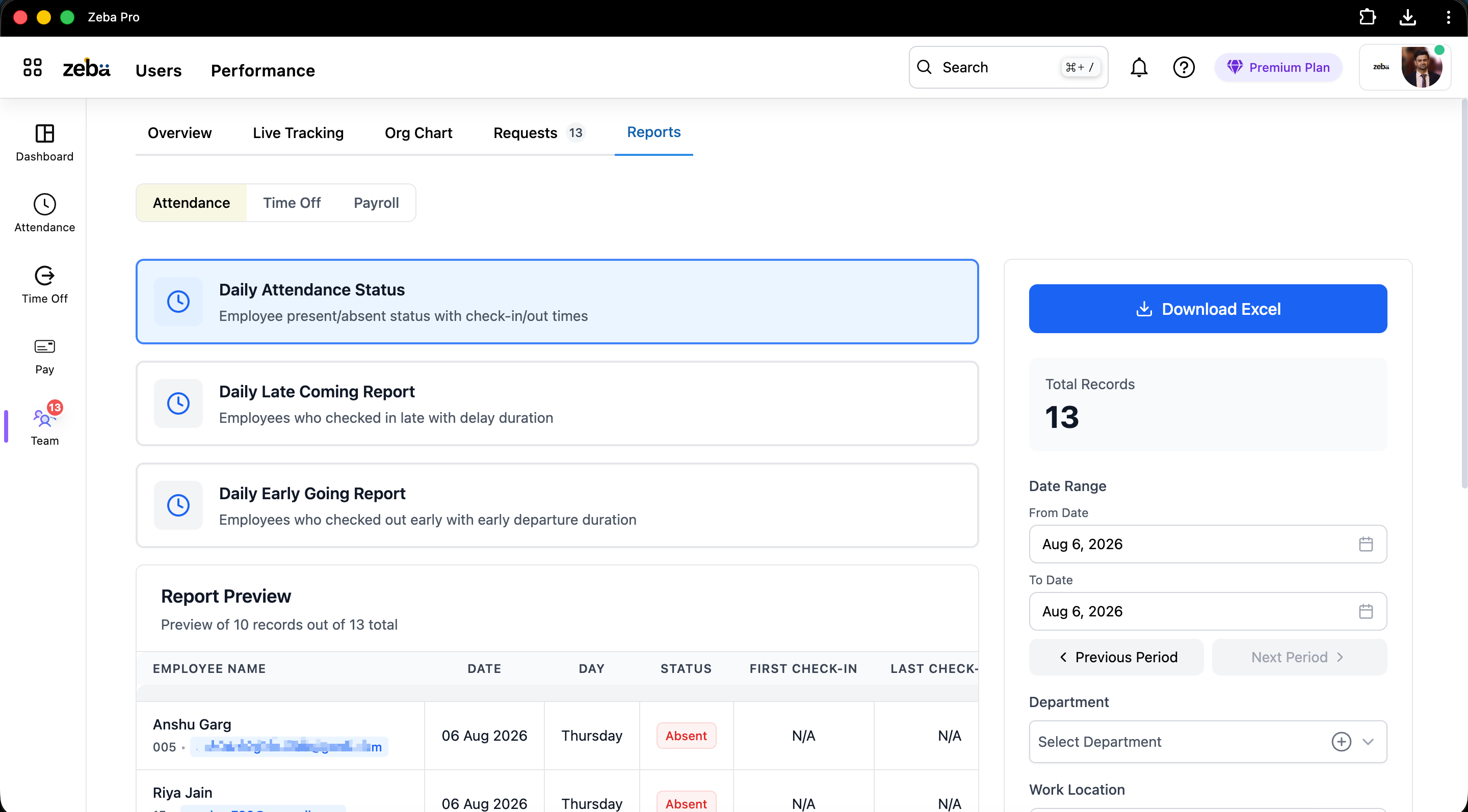
- Set Up an Automated System: Utilize HR software like Zeba Pro to automate attendance tracking.
- Integrate with Payroll: Ensure that attendance data feeds directly into your payroll system for seamless processing.
- Train Employees: Conduct a short training session to familiarize employees with the new system.
- Monitor and Adjust: Use initial data to make adjustments to your tracking processes as needed.
Real-World Examples of Effective Attendance Tracking
Let’s look at how two companies effectively implemented attendance tracking systems:
Case Study 1: Tech Solutions Inc.
Tech Solutions Inc. faced challenges with manual attendance tracking, leading to payroll discrepancies. They implemented Zeba Pro's automated attendance system, allowing employees to clock in and out via a mobile app. Within weeks, they reduced payroll processing time by 50% and increased employee satisfaction due to accurate paychecks.
Case Study 2: Retail Co.
Retail Co. struggled with time theft among staff. They adopted biometric attendance tracking, which helped eliminate buddy punching. The company saw a 30% reduction in labor costs over three months, thanks to accurate attendance data.
Practical Takeaways for Effective Attendance Tracking
Here are some practical takeaways to help you implement an effective attendance and time tracking system:
- Evaluate your current tracking method and identify gaps.
- Choose a solution that fits your business size and needs.
- Encourage open communication with employees about attendance policies.
- Regularly review attendance data to spot trends or issues.
- Stay compliant with labor laws by keeping up with any changes.
Key Metrics to Track
Monitoring the right metrics can greatly enhance your attendance and time tracking strategy. Here are some key metrics to consider:
| Metric | Description | Purpose |
|---|---|---|
| Absenteeism Rate | Percentage of employees who are absent during a period. | Identifies patterns in employee attendance. |
| Employee Turnover Rate | Percentage of employees leaving the organization. | Helps gauge employee satisfaction and retention. |
| Punctuality Rate | Percentage of employees arriving on time. | Measures reliability and commitment. |
| Overtime Hours | Total hours worked beyond regular hours. | Helps in budget management and understanding workload. |
Conclusion: Steps for Immediate Action
As you consider enhancing your attendance and time tracking processes, here are actionable steps you can take right now:
- Assess your current attendance tracking methods.
- Identify gaps and areas for improvement.
- Research automated solutions that fit your needs, such as Zeba Pro.
- Engage your team in the transition process for better buy-in.
- Set a timeline for implementation and review progress regularly.
By streamlining your attendance and time tracking processes, you can save valuable time and resources, ultimately boosting productivity and employee satisfaction in your organization.
Related reading
- Mastering Attendance and Time Tracking in 2026: Essential Strategies
- Mastering Attendance and Time Tracking in 2026: Key Strategies
- 13 HR Metrics You Should Track for Attendance and Time Management
- 5 HR Metrics You Should Track for Attendance and Time Management
- 50 Employee Live Location Tracking Tips for Effective Management
- 90% of Businesses Risk Inefficiencies Without Live Employee Tracking
- Streamlining Payroll Automation for SMEs in 2026
- Track Your Field Employees Live in Under 7 Minutes
- 11 Hidden Payroll Costs of Leave and Holiday Management
- 11 HR Metrics You Should Track for Effective Payroll Management


