


Understanding statutory components is crucial for businesses in India. In 2026, staying compliant with these regulations is not just a legal requirement but also a key factor in enhancing employee trust and operational efficiency.
What are Statutory Components?
Statutory components are legal requirements that businesses must adhere to as part of their operations. In India, these components govern various aspects of employee management, including wages, benefits, and working conditions. Failing to comply with these regulations can lead to penalties and legal challenges. Therefore, understanding these components is essential for every HR and payroll professional.
Key Statutory Components in India
In 2026, businesses in India must navigate several statutory components. Here’s a breakdown of the most important ones:
- Provident Fund (PF): A mandatory retirement savings scheme for employees.
- Employee State Insurance (ESI): A health insurance scheme that provides medical benefits to employees.
- Professional Tax (PT): A state-level tax levied on income earned by professionals.
- Gratuity: A monetary benefit provided to employees upon leaving the company after a qualifying period.
- Bonus: A share of profits given to employees, mandated under the Payment of Bonus Act.
Understanding Each Component
Provident Fund (PF)
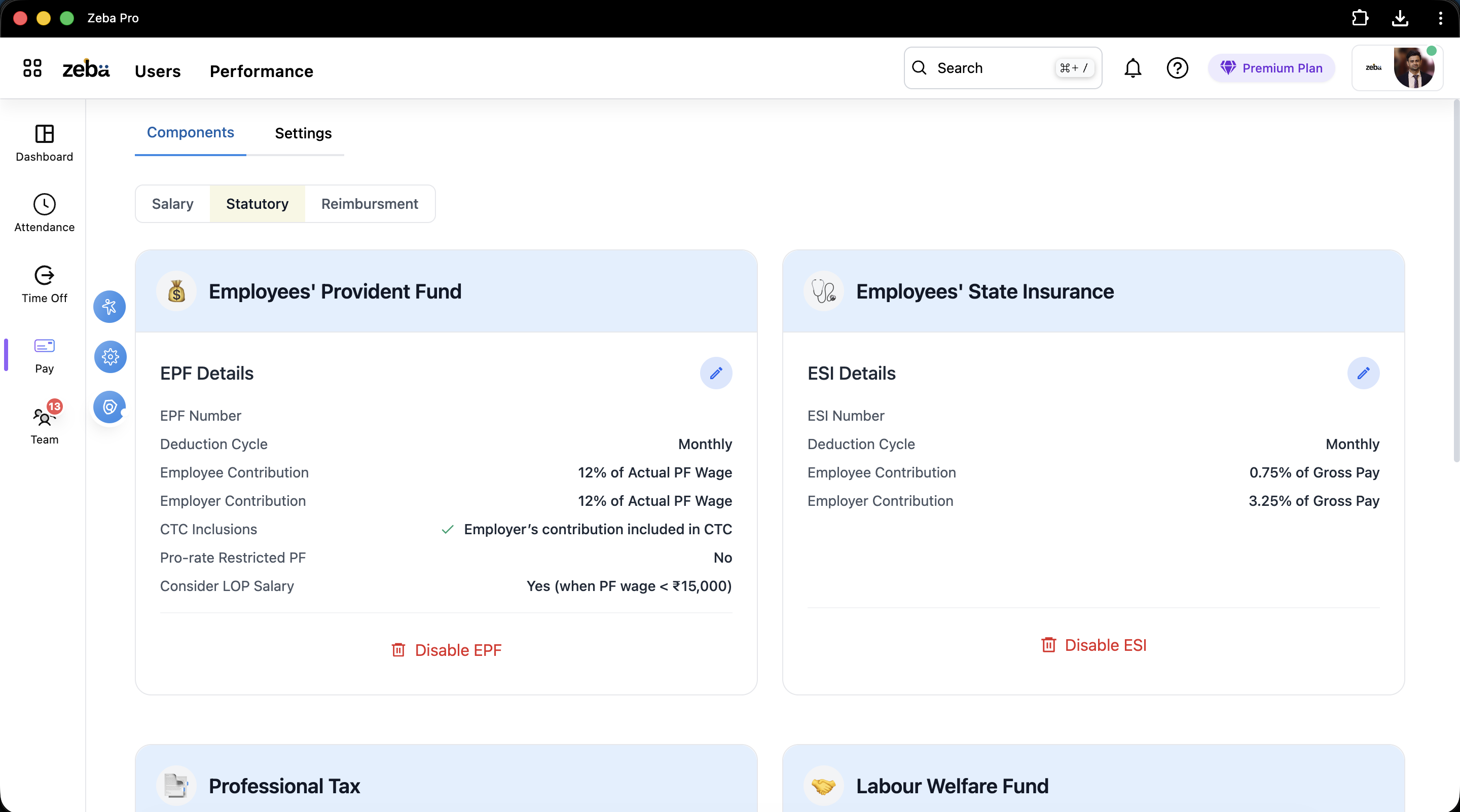
The Employees' Provident Fund Organization (EPFO) manages the PF scheme. Both employers and employees contribute a fixed percentage of the salary towards this fund. The current contribution rate is 12% from each party. The accumulated amount plus interest is payable to the employee upon retirement or resignation.
Employee State Insurance (ESI)
ESI provides social security and health insurance benefits to employees. It covers medical expenses, maternity benefits, and disability benefits. Employers contribute 3.25% of the employee’s wages, while employees contribute 0.75% of their wages. It is mandatory for businesses with 10 or more employees earning below a specific threshold.
Professional Tax (PT)
Professional tax is a state-level tax, and the rates may vary from one state to another. The tax is deducted from an employee’s salary, and the employer is responsible for remitting it to the government. Compliance with PT laws is crucial, as failure to do so can lead to penalties.
Gratuity
Gratuity is applicable to employees who have been with the company for at least five years. It is calculated as 15 days’ wages for every completed year of service. The Payment of Gratuity Act governs this component, and employers must ensure timely payment to avoid legal complications.
Bonus
Under the Payment of Bonus Act, eligible employees are entitled to an annual bonus based on the organization's profits. The minimum bonus is 8.33% of the salary, and the maximum is 20%. Employers must maintain proper records to ensure compliance.
Compliance Requirements
To ensure compliance with these statutory components, businesses must take the following steps:
- Regularly Review Policies: Ensure that your HR policies reflect the latest statutory requirements.
- Maintain Accurate Records: Keep detailed records of contributions, payments, and employee data.
- Train HR Personnel: Equip your HR team with knowledge about compliance and regulations.
- File Returns Timely: Ensure timely filing of statutory returns to avoid penalties.
- Engage Professionals: Consider hiring a compliance expert for complex regulations.
Consequences of Non-Compliance
Non-compliance with statutory components can lead to severe consequences. Here are some potential repercussions:
- Financial Penalties: Organizations may face fines and penalties for failing to comply with regulations.
- Legal Action: Employees may take legal action against employers for non-payment of dues.
- Reputation Damage: Companies that fail to comply risk damaging their reputation, which can affect employee morale and recruitment.
- Operational Disruptions: Compliance issues can lead to disruptions in operations, affecting overall productivity.
Real-World Examples
Consider a small IT firm that neglected to register for ESI. As a result, when an employee fell ill and required medical attention, the firm faced scrutiny and legal challenges for failing to provide the necessary health benefits. This incident not only cost the firm financially due to penalties but also affected employee trust.
On the other hand, a manufacturing company that diligently maintained compliance with PF and gratuity regulations found that their employees were more satisfied and engaged, leading to lower turnover rates and higher productivity.
Tools for Compliance Management
In today’s digital age, leveraging technology can significantly streamline compliance processes. Here are some tools that can help:
- HR Management Software: Tools like Zeba Pro can automate compliance and payroll management.
- Payroll Software: Automating payroll calculations can help ensure timely remittance of statutory contributions.
- Employee Tracking Systems: Using employee tracking systems can help maintain accurate attendance records.
Best Practices for Maintaining Compliance
To ensure ongoing compliance with statutory components, consider these best practices:
- Conduct Regular Audits: Schedule periodic audits of your payroll and compliance practices.
- Stay Updated: Regularly check for updates in statutory laws and guidelines.
- Educate Employees: Provide training sessions for employees on their rights and benefits.
- Engage with Professionals: Consult with legal or HR experts to address complex compliance issues.
Conclusion: Next Steps for Your Business
Understanding and managing statutory components is vital for every business in India. In 2026, consider the following actions:
- Review your current HR policies to ensure they align with statutory requirements.
- Implement an HR management system such as Zeba Pro that automates compliance processes.
- Train your HR team on these statutory components to enhance their knowledge and preparedness.
- Stay proactive about compliance to avoid financial and legal repercussions.
By keeping these statutory components in mind, you can foster a compliant, transparent, and productive workplace for your employees. As you navigate the complexities of HR and payroll management, remember that compliance is not just about avoiding penalties; it's about building trust and enhancing the overall employee experience.
Related reading
- Navigating HR Compliance and Statutory Workflows in 2026
- Leave and Holiday Management: A Comprehensive Guide for 2026
- Leave and Holiday Management: Best Practices for 2026
- Mastering Attendance and Time Tracking in 2026: Essential Strategies
- Mastering Attendance and Time Tracking in 2026: Key Strategies
- Payroll Automation for SMEs: A Game Changer in 2026
- Payroll Automation for SMEs: Boost Efficiency in 2026
- Streamlining Payroll Automation for SMEs in 2026
- The All-in-One HRMS Solution Transforming Business Operations in 2026
- The All-in-One HRMS Solution You Need in 2026


